Stretching is often the most ignored part of a fitness routine. Many people focus on cardio or strength training but skip stretching, assuming it is optional. In reality, daily stretching is essential for maintaining flexibility, preventing injuries, and supporting overall physical health.
Even if you do not exercise regularly, stretching plays a vital role in keeping your body functional and pain-free.
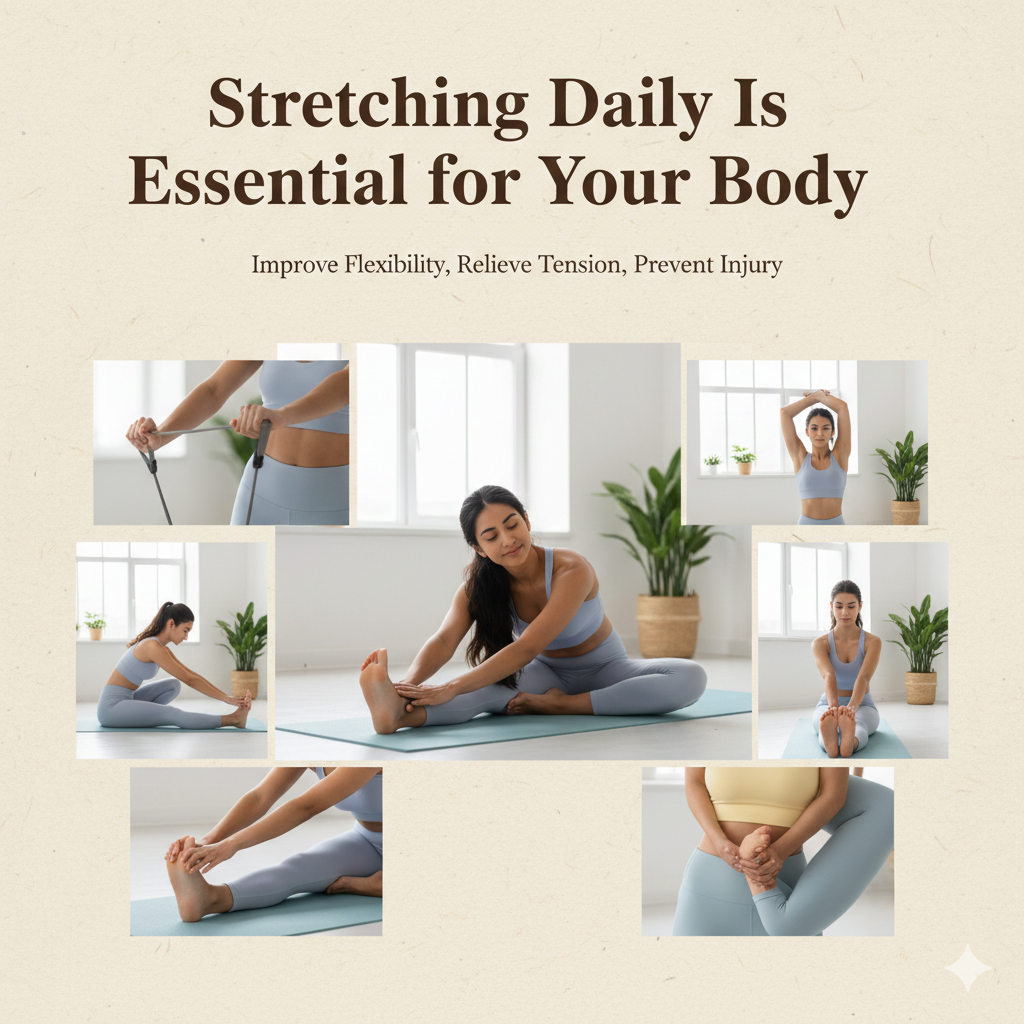
Improves Flexibility and Mobility
As we age, muscles naturally become tighter and less elastic. Sitting for long hours further reduces flexibility.
Daily stretching helps:
- Improve range of motion
- Reduce stiffness
- Enhance overall mobility
Better flexibility makes everyday movements like bending, reaching, or climbing stairs easier and safer.
Reduces Muscle Tension
Stress, poor posture, and inactivity cause muscle tightness, especially in the neck, shoulders, and lower back.
Stretching relaxes tight muscles and improves blood circulation. This reduces discomfort caused by prolonged sitting or standing.
Gentle stretching after a long workday can significantly relieve tension.
Prevents Injuries
Flexible muscles are less likely to tear or strain. When muscles are tight, sudden movements increase the risk of injury.
Regular stretching prepares muscles and joints to move more efficiently. It supports balance and coordination, reducing the risk of falls.
Improves Posture
Poor posture is common due to desk jobs and mobile device usage. Tight chest muscles and weak back muscles contribute to rounded shoulders and back pain.
Stretching the chest, shoulders, and hip flexors helps correct posture and align the spine properly.
Improved posture also enhances confidence and breathing capacity.
Enhances Blood Circulation
Stretching increases blood flow to muscles. Better circulation delivers oxygen and nutrients efficiently throughout the body.
Improved circulation supports muscle recovery and reduces soreness after workouts.
Supports Mental Relaxation
Stretching is not only physical — it also benefits mental health.
Slow, controlled stretches combined with deep breathing help:
- Reduce stress
- Calm the nervous system
- Improve focus
It creates a moment of mindfulness in a busy day.
Promotes Better Sleep
Gentle stretching before bedtime relaxes muscles and lowers tension levels. This can improve sleep quality and help you fall asleep faster.
Avoid intense stretching at night. Focus on slow, soothing movements.
Easy Daily Stretching Routine
You can include these simple stretches:
- Neck rolls
- Shoulder stretches
- Hamstring stretch
- Quadriceps stretch
- Cat-cow stretch
- Child’s pose
Spend 10–15 minutes daily for noticeable benefits.
Consistency Matters
Stretching does not require equipment or a large space. It can be done at home, at work, or even while traveling.
The key is regular practice. Short daily sessions are more effective than occasional long sessions.
Your body is designed to move. Stretching keeps it flexible, balanced, and resilient. When done consistently, it supports long-term physical comfort and overall well-being.