Starting a fitness journey can feel overwhelming, especially if you are new to exercise. Many people believe they need expensive gym memberships, machines, or advanced routines to get fit. In reality, you can begin your fitness journey right at home with simple movements that require little to no equipment.
Home workouts are convenient, flexible, and effective when done consistently. For beginners, the goal is not intensity but building a strong foundation.
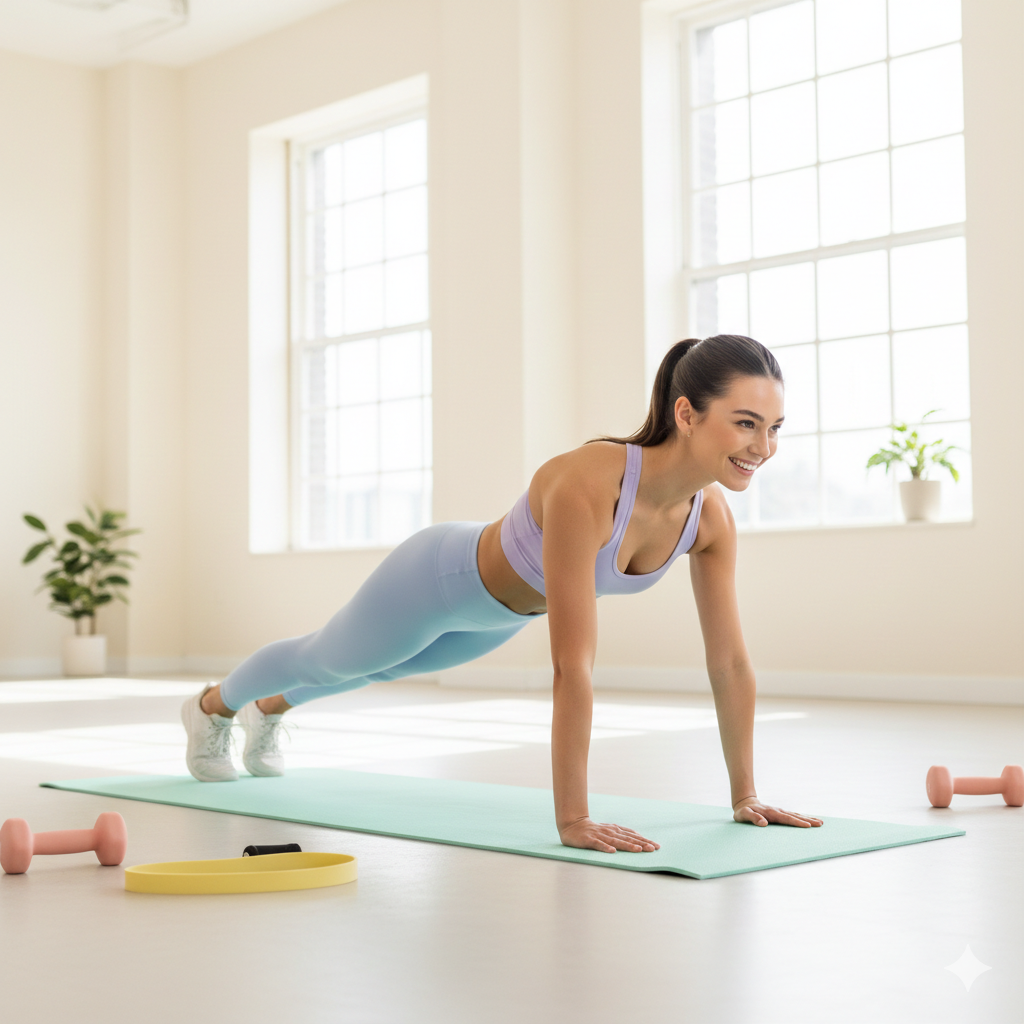
Why Home Workouts Work
Exercising at home removes common barriers such as travel time, crowded gyms, and self-consciousness. It allows you to move at your own pace and focus on learning proper form.
With regular practice, even basic exercises can:
- Improve strength
- Increase stamina
- Boost metabolism
- Enhance mood
The key is consistency.
Warm-Up First
Before starting any workout, warm up for 5–7 minutes. Warming up prepares your muscles and reduces the risk of injury.
Simple warm-up options:
- Marching in place
- Arm circles
- Neck rotations
- Gentle stretching
- Light jumping jacks
Warming up increases blood circulation and activates your muscles.
Beginner Bodyweight Routine
You do not need weights to build strength. Your body weight is enough.
Start with this simple routine:
1. Squats (10–12 repetitions)
Strengthens legs and glutes.
Keep your back straight and lower your hips as if sitting on a chair.
2. Wall or Knee Push-Ups (8–10 repetitions)
Builds upper body and core strength.
Keep your body aligned and avoid arching your back.
3. Lunges (8 repetitions each leg)
Improves balance and leg strength.
Step forward and lower your back knee gently toward the floor.
4. Glute Bridges (10–12 repetitions)
Strengthens hips and lower back.
Lie on your back, bend your knees, and lift your hips upward.
5. Plank (15–30 seconds)
Builds core stability.
Keep your body in a straight line and engage your abdominal muscles.
Repeat the circuit 2–3 times depending on your comfort level.
Cardio at Home
Cardiovascular exercise improves heart health and burns calories. Simple beginner-friendly options include:
- Brisk walking inside or on the terrace
- Step-ups on stairs
- Low-impact jumping jacks
- Dancing to music
Start with 10–15 minutes and gradually increase duration.
Stretch and Cool Down
Cooling down is just as important as warming up. Spend 5–10 minutes stretching major muscle groups to reduce soreness and improve flexibility.
Focus on:
- Hamstrings
- Calves
- Shoulders
- Lower back
Deep breathing during stretching helps relax your body.
Weekly Plan for Beginners
You can follow this simple schedule:
- 3 days strength training
- 2 days light cardio
- 2 days rest or gentle stretching
Rest days allow muscles to recover and grow stronger.
Tips for Staying Consistent
- Set a fixed time for workouts
- Wear comfortable clothing
- Track your progress
- Start small and increase gradually
Avoid comparing yourself to others. Fitness is a personal journey.
Listen to Your Body
Mild muscle soreness is normal when starting out. However, sharp pain or extreme fatigue means you should slow down.
Stay hydrated and maintain a balanced diet to support your workouts.
Starting with simple home workouts builds confidence and creates a sustainable habit. You do not need perfection. You only need commitment and regular effort. Over time, these small steps will lead to noticeable improvements in strength, energy, and overall health.